Fries are a craveable classic. Nothing beats the irresistible crunch of perfectly fried fries. From golden, crispy shoestrings to hearty wedges, they deliver unmatched versatility, flavor, and satisfaction in every bite. For home chefs, creating this delicious side dish doesn’t have to be complicated. In fact, it can be a fun way to learn new techniques and customize your fries.
Different potato varieties, cuts, seasonings, and cooking methods each create unique flavors and textures. The secret to making restaurant-quality fries is deep-frying, whether using fresh potatoes or cooking frozen ones. This guide covers every step and tip to create crispy, flavorful fries.
How to Make Crispy Fries from Fresh Potatoes: Quick Step-by-Step
- Cut potatoes into evenly sized pieces
- Soak in water for 15 minutes
- Drain and dry thoroughly
- Fry in neutral oil twice to achieve maximum crispiness
- Season immediately after cooking
*Skip steps 1-3 if using frozen fries.
Read on to learn more about each of these steps.
Best Practices for Crispy Homemade Fries
Great fries start with the right preparation. Certain types of potatoes will yield better fries than others, and certain cuts will be easier to DIY. Here are the best practices.
What Type of Potato to Use
Use a starchy potato variety for optimal fries. Russets will typically deliver a crispy outside and a soft, fluffy interior. Yellow and white potatoes will also work well, providing a slightly creamier texture. It’s best to avoid red potatoes and other waxy varieties.
To Peel or Not to Peel
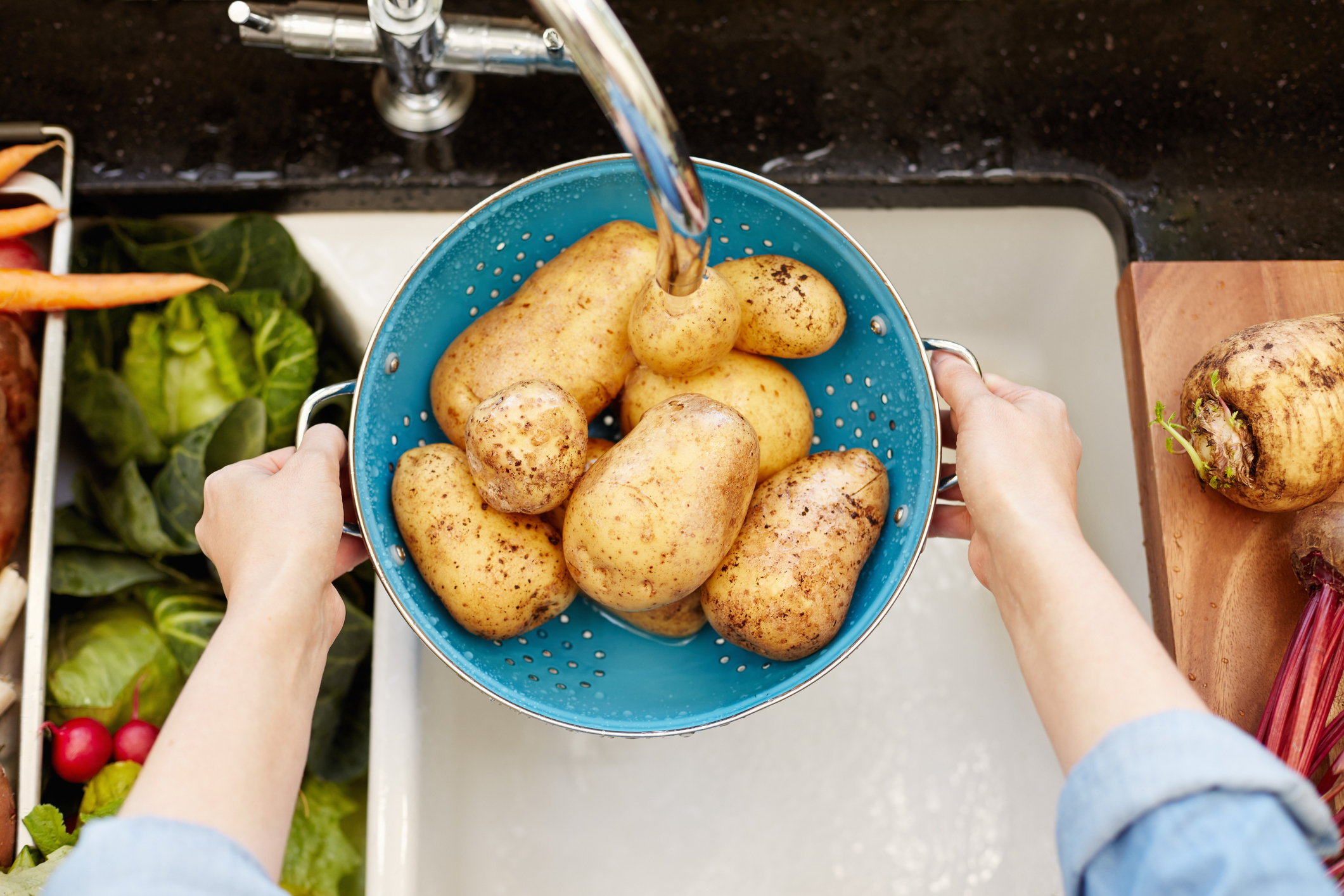
Peeling potatoes for fries is a matter of personal preference. Both peeled and skin-on potatoes can create delicious results. Just be sure to wash the skins well when opting to leave them on.
Easy Ways to Cut Potatoes for Fries
The best styles to make at home are simple ones like wedges, steak fries, and shoestrings.
Wedges are the easiest to cut by hand. First, cut the potato in half lengthwise and then again into quarters. Then, place each quarter cut side up and slice it down the middle to create a wedge shape.
If you prefer shoestring or steak fries, start by cutting the potato into a rectangular shape, removing the top, bottom, and sides (this doesn’t have to be perfect, especially if you want to minimize waste). Next, slice it into quarter-inch to half-inch planks. Stack the planks horizontally and slice again. Make these thicker or thinner to suit your taste.
If you want to make crispy matchstick-style fries, the best bet is to use a mandolin slicer with the right attachment.
Whichever style of fry, the goal is consistency, because uniform size ensures even cooking and better texture throughout.
Soak Potatoes for Maximum Crispiness
Soaking cut potatoes in water for about 15 minutes removes excess starch, helping fries achieve a crisp exterior. After soaking, drain them thoroughly and pat them dry with a towel.
Fries Shine with Seasoning
Fries are the perfect canvas for a variety of delicious flavors. Always salt fries to enhance their natural taste and then customize with bold spice blends, herbs, and even cheese. For even coating, toss hot fries with seasoning immediately after cooking.
An easy way to do this is the Fry Bag Method: Combine hot fries with a seasoning blend in a paper bag and shake it.
Check out more Fry Bag tips and flavor inspiration
Tips for Deep Frying Friesat Home
Deep frying remains the gold standard for French fries because it creates the ideal contrast between texture and flavor. Consistent high heat allows the outside to become golden and crisp while the inside stays light and tender.
The key is controlling moisture and temperature throughout the cooking process.
Key tips for deep frying:
- Use a neutral oil with a high smoke point, such as peanut, canola, or avocado oil
- Use a deep, heavy-bottomed pot and a candy thermometer if you don’t own a tabletop fryer
- Fill the pot or fryer half way with oil
- Maintain oil temperature between 350°F and 375°F
- Cook in small batches to prevent temperature drops and oil spills
- When using frozen fries, don’t thaw them first.
- Watch the bubbles in the oil to determine doneness. Smaller bubbles signal that more moisture has evaporated, so the fries are approaching crispiness. The bubbles will gradually decrease in size while cooking
- Fry twice for maximum crispiness
- Season immediately after cooking
This method delivers bold flavor and texture, ideal for a classic fry.
For step-by-step instructions, follow this Steak Frites Recipe.
Frequently Asked Questions
What are the best potatoes for fries?
Starchy varieties like Russet potatoes create the ideal balance of crispiness and softness.
How can fries be made extra crispy?
Soaking, drying thoroughly, cooking at the right temperature, and double-frying all help improve crispiness.
Can fries be made without deep frying?
Yes. Baking and air frying provide alternative methods that still deliver great flavor and texture.
Bring Restaurant-Quality Fries Home
A few simple techniques can turn fresh potatoes into crispy, golden fries worthy of any restaurant menu. From choosing the right potato to mastering the double-fry method, deep frying unlocks exceptional texture, flavor, and satisfaction.