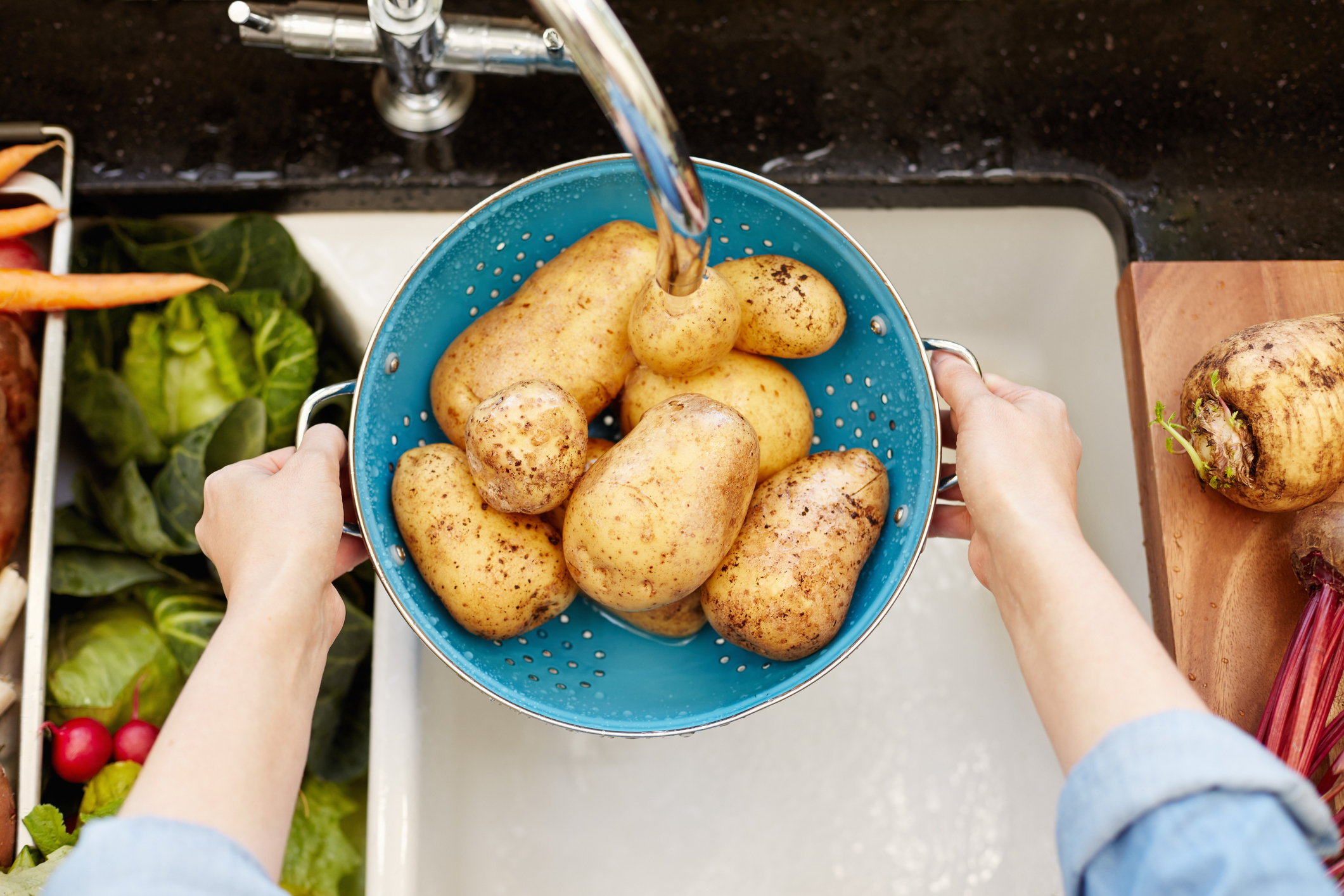
Did you know that potatoes are a part of nearly every global cuisine? They’re grown on every continent except Antarctica, and they’re a staple food for 2/3 of the world’s population.
Potatoes are grown and enjoyed across the world for a good reason: they’re delicious, nutrient-dense vegetables that provide the energy, potassium, and vitamin C you need to fuel your day. They’re the perfect canvas for a wide range of flavors and cuisines.
Each culture has its own unique ways of preparing and enjoying them. Learn about the origins of potatoes, the history of various potato dishes across the world, and let your taste buds travel with these potato recipes.
Potato Origins
Potatoes were first cultivated more than 8,000 years ago by the Inca Indians in the Andes Mountains of southern Peru and northwestern Bolivia. They developed thousands of varieties suited to the region’s different climates, altitudes, and soils.
Not only were potatoes an important food to the Andean people, but the crop was central to their culture. For example, some ancient civilizations measured time by how long it took a potato to cook.
How Potatoes Spread Across the World
Centuries after their domestication, potatoes were brought to Europe by Spanish Conquistadors in the 1500s. Europeans were initially wary of the new crop and used potatoes primarily as animal feed.
However, potatoes thrived in Europe’s cooler climate, especially in Ireland, making them a practical and economical way to feed a growing population. By the 1700s, they had proliferated across the continent and were considered a staple crop.
From Western Europe, potatoes traveled to Eastern Europe and Russia and then continued along established trade routes into China and India. Potatoes also appeared in Africa, particularly in the highland regions, not long after.
Potatoes arrived in the United States (then just a collection of colonies) in the 1620s, when the Governor of the Bahamas sent a gift box containing potatoes to the governor of the colony of Virginia. They didn’t become popular, though, until Thomas Jefferson served potatoes at the White House, giving them an aristocratic seal of approval.
Global Potato Recipes
Potatoes gained popularity worldwide not just because they grew well and provided a nutrient-dense food source, but also because people discovered that they were delicious and easily adaptable to any cuisine.
Through potatoes, we can explore flavors from around the globe and learn a bit about other cultures. These are some of the most beloved potato dishes from other countries. Get the recipes and try them for yourself!
Gnocchi (Potato Pasta)
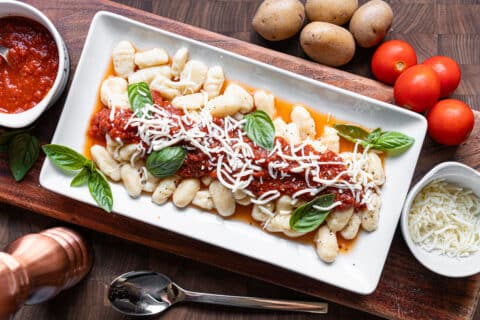
Potato gnocchi combine two winning foods: potatoes and pasta. Mashed russet potatoes (or instant potato flakes) are combined with eggs and flour to make these delicious little dumplings.
Gnocchi evolved from ancient Roman dumplings into the potato pillows we know today, especially in the cooler northern regions of Italy, where potatoes thrived.
The ridges were designed to cling to sauce, a technique championed by Pellegrino Artusi. Many regions of Italy have their own version, and every bite tells a different Italian story.
Get the Recipe for Gnocchi
Irio (Kenyan Potato, Pea, and Corn Mash)
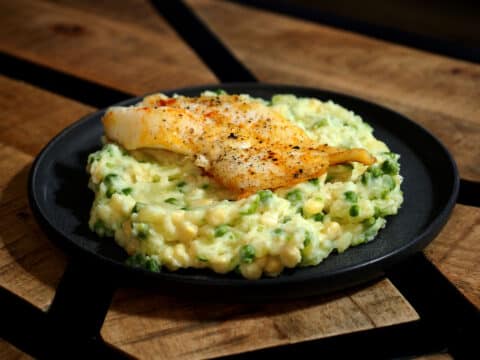
Irio, a traditional Kenyan dish rooted in Kikuyu cuisine, is an earthy mash of boiled potatoes, peas, and corn made to be hearty, nourishing, and communal.
As it spread across Kenya, variations emerged based on local crops and preferences, but the purpose stayed the same: a satisfying side for stews, grilled meats, and fish.
Get the Recipe for Irio
Korokke (Japanese-style Potato Croquette)

Korokke is a Japanese take on a French classic, the croquette. Mashed potatoes and ground meat are formed into a patty, then coated in panko breadcrumbs and fried.
This spud snack evolved from the French croquette after it arrived in Japan in the late 1800s. The Japanese spin turned the dish from an elite novelty into everyday comfort food by using accessible ingredients.
Korokke is now a staple in convenience stores and markets. There’s even a modern tradition of eating korokke when typhoons approach. Served with sauce, on noodles, or between slices of bread, korokke goes wherever cravings lead.
Get the Recipe for Korokke
Schupfnudeln (German Potato Noodles)
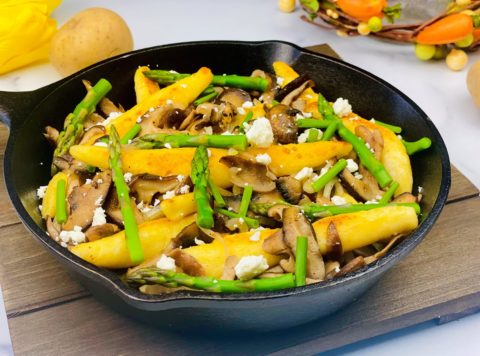
Schupfnudeln are German potato noodles, also called fingernudel, or finger noodles, for their oblong shape. The addition of mashed potatoes to a simple dough makes these noodles tender and hearty.
In response to rations during the Thirty-Year War, Germans created a dough made from flour and water. After potatoes became common in Germany, the recipe evolved into the schupfnedeln we know today.
They are often savory with sauerkraut, butter, or cream sauce, but they can also be made sweet. Schupfnudeln is a regional favorite, especially in southern areas like Baden and Swabia.
Get the Recipe for Schupfnudeln
Pierogi (Polish Potato Dumplings)
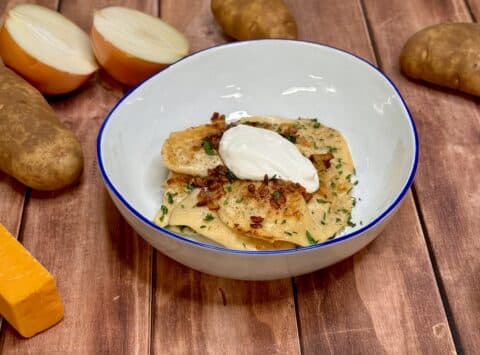
These potato-filled dumplings from Poland are rich, delicious, and satisfying. Cheddar cheese and sautéed onions are added to mashed potatoes, which are then wrapped in a simple, unleavened dough. The dumplings are briefly boiled and pan-fried to create a crispy exterior.
This version, with potato, cheese, and fried onions, is widely known as pierogi ruskie and remains one of the most beloved variations. Other popular fillings for pierogis include sauerkraut, mushrooms, and ground meat. They can even be filled with fruit.
Pierogis have a long, debated origin story, with early documented references appearing in Polish cookbooks from the 1600s. Likely traveling into Poland via trade routes in the Middle Ages, they began as peasant food and expanded across classes, eventually becoming central to holiday traditions.
Get the Recipe for Pierogi
Maafe (African Peanut Stew with Potatoes)

Maafe, which means groundnut stew, is also called African Peanut Stew with potatoes. It’s made by simmering ground peanuts, tomatoes, onions, garlic, chilies, potatoes, other vegetables, and meat. It’s traditionally eaten with fufu, a dough-like dumpling made from starchy vegetables.
This thick, savory stew is a West African staple rooted in Mande-speaking cultures across Mali, Senegal, and Guinea, where cooks used groundnuts and seeds to build sustaining sauces. After peanuts arrived via Portuguese trade in the 16th century, the stew evolved into the beloved form many know today.
In Senegal, it is called maafe. In Mali, tigadegena (Tiga-dagah-nah). In Gambia, domodah is actually their national dish.
It goes by many names, but the comfort is universal.
Get the Recipe for Maafe
Poutine

What better way to warm up on a cold day than with poutine? This dish takes hot, crispy fries and tops them with fresh cheese curds and hot brown gravy.
Our tip: Make this at home with frozen fries (make sure you take them out of the freezer right before cooking, so they don’t have a chance to thaw) and pop them in an air fryer or a hot oven to get them extra crispy without deep-frying.
Poutine was born in rural Quebec in the late 1950s, tied to roadside diners and working-class comfort. Authentic poutine relies on fresh-cut fries and fresh and never-refrigerated curds for that signature “squeak.”
Legend has it, a customer in Warwick, Quebec, asked for cheese curds thrown onto his fries, and the cook reportedly said it would make a “poutine,” Quebecois slang for “a messy thing.”
Of course, you can make poutine your own by adding your favorite cheese, sauces, and extras to your fries.
Get the Recipe for Poutine
Aloo Gobi (Indian Potato and Cauliflower Curry)

Aloo gobi is a popular vegetarian curry from India made with potatoes (aloo) and cauliflower (gobi). It’s seasoned with turmeric, cumin, and coriander for a bright, rich flavor.
Make it using a distinctly Indian technique: blooming spices in hot oil and layering flavors with patience.
This dish became a North Indian household staple as potatoes and cauliflower spread through Indian agriculture in the 19th century. What makes it enduring is not age, but practicality: it’s affordable, filling, vegetarian, and flexible. Every home makes it differently, and that’s exactly the point.
Get the Recipe for Aloo Gobi